
What the Evidence Actually Supports — and What It Does Not
Ask whether a wine cabinet adds value to a home and you will get two confident answers: “absolutely, it’s a luxury amenity” and “no, buyers don’t pay for that.” Both are half right, and both are usually stated without evidence. This article separates the claim into its checkable parts: what appraisers actually count, what buyer-survey literature does and does not support, where a cabinet genuinely pays, and where it quietly costs. No invented percentages follow — where the honest answer is “it depends,” it says so.
Part One: What an Appraiser Counts
Residential valuation methods — the sales-comparison approach used across most markets — value a property against comparable sales, with adjustments for functional characteristics: livable area, bedrooms and bathrooms, finishes, condition, and notable amenities. A wine cabinet sits awkwardly in that framework. It is not square footage; it is usually not a fixture that transfers with the property unless it is built in; and its value to a given appraiser depends on whether comparable sales in the area carry similar features.
Three consequences follow, and they are structural rather than opinion:
- Plug-in cabinets mostly escape the valuation. They move with the seller, like a refrigerator. What the appraisal may capture is the built-in envelope — a conditioned, finished storage space — because finished usable space is countable.
- The adjustment only appears if comparables show it. In neighborhoods where wine storage is uncommon, appraisers have nothing to adjust against, and a well-built cellar gets valued as generic finished space.
- What reliably counts is utility, not theme. A conditioned room that a buyer could also use for storage, a pantry, or a home bar is worth more than a room that only a wine collector could use. Over-specialization narrows the buyer pool, and a narrower pool is a slower sale even at the same price.
Part Two: What Buyer-Survey Literature Says
Realtor associations and home-staging guides tend to place wine storage in the category of “aspirational” amenities: features that appear on wish lists far more often than they influence purchase decisions. The pattern that repeats across such surveys is familiar from other luxury features: buyers admire wine rooms in listings, but the features that actually move decisions are kitchens, bathrooms, and usable space.
The honest reading of that literature is not “wine storage is worthless.” It is that wine storage works as a differentiator, not as a driver — it helps a listing stand out among similar homes, and it helps a home sell to the particular buyer who wanted one anyway. Differentiation shortens time on market in some cases; no survey supports the claim that it adds a fixed percentage to price, and any article quoting one should be read with suspicion — including by us.
Part Three: Where a Cabinet Genuinely Pays
Three situations, all checkable rather than rhetorical:
- When the wine would otherwise be badly stored. A collection kept on kitchen racks above the refrigerator — the warmest, most vibration-prone spot in most kitchens — is degrading, since wine wants roughly 13°C held steady and that spot is neither. A cabinet that prevents damage to a collection with real replacement value is not a decor purchase; it is insurance with a payback you can compute: the replacement cost of the collection against the cabinet’s price.
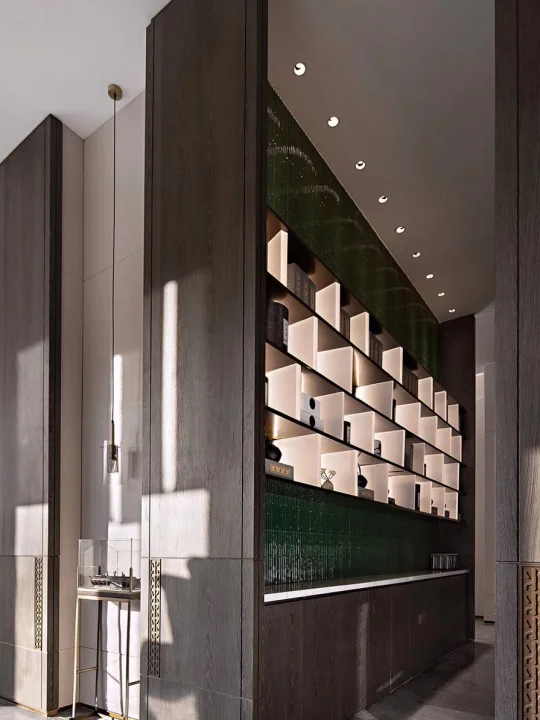
- When it is built into dead space. A conditioned cabinet or cellar wall filling an under-stair void, a dead alcove, or an unused closet converts square footage that appraisers already count into something presentable. This is the one construction pattern where the value argument is straightforward, because the space had value before and was wasted.
- When the target market wants it. Not every market, and not every price band. In areas where dining and entertaining genuinely drive purchases — and where comparable listings carry wine rooms — the feature reads as expected equipment. In markets where it is rare, the same money spent on a bathroom usually returns more. Look at the listings your buyer will compare you against; that is the whole method.
Part Four: Where It Quietly Costs
The failure patterns are predictable, and worth stating plainly because they are avoidable:
- The DIY conversion that fails inspection. A basement closet with a portable cooler, no vapor barrier, and damp walls reads at viewing as “moisture problem.” Buyers do not see wine storage; they see the reason the labels are spotted. A bad cellar costs more than no cellar.
- Over-specialization. A room that can only be a wine cellar — fixed racking, sealed, no ventilation to speak of — serves exactly one buyer profile. The same room framed as flexible conditioned storage serves several.
- Equipment that does not convey. A free-standing cabinet the seller takes to the next house leaves a built-in-looking hole and an awkward conversation at negotiation. Decide before listing what conveys and say so in the listing.
Part Five: The Question Behind the Question
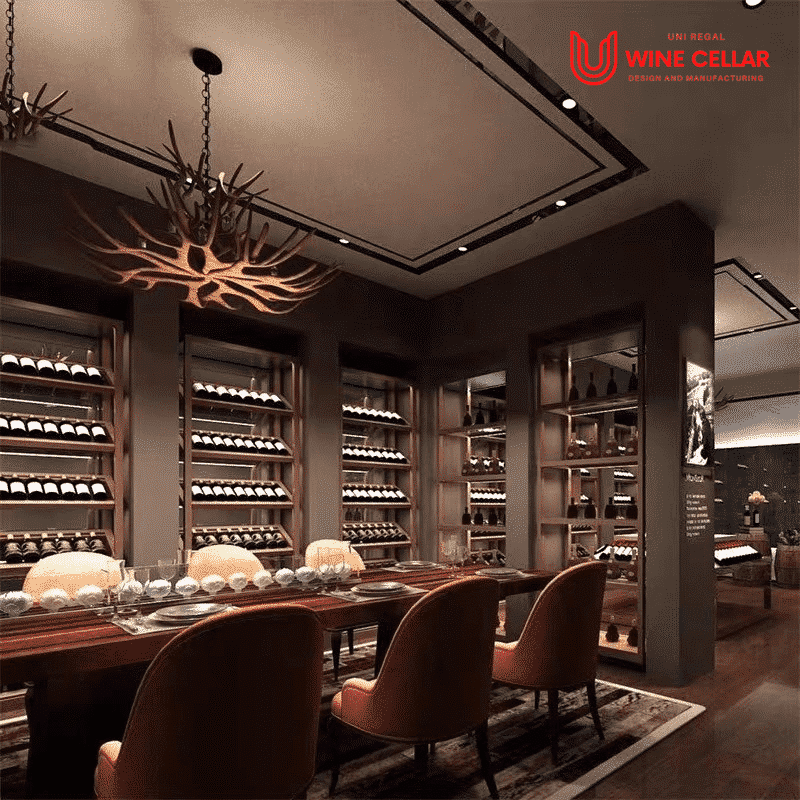
Most people asking this question own wine, not a future listing. So it is worth answering both. If the cabinet’s job is to protect a collection you intend to drink over years, the value calculation is internal and real: replacement cost avoided, serving temperatures actually achieved, and the difference between a bottle at year five and the same bottle ruined at year two. That value does not need a buyer survey to justify it.
If the cabinet’s job is resale, the evidence says: build it into space that was already counted, keep the room’s use flexible, finish it to the standard of the rest of the house, and put it in a market that has seen one before. Then it differentiates. Done any other way, it is a personal purchase wearing a financial costume.
Part Five-and-a-Half: Document It, or It Reads as a Hobby
There is a practical step that separates a wine feature that reads as an asset from one that reads as someone’s project: paperwork. The documentation that matters is boring and cheap to keep — the installation manual and spec sheet, the cooling unit’s service history, receipts for the sealed door and vapor barrier work, and ideally a log of the room’s temperature readings across at least one summer. A buyer’s inspector, or an appraiser’s comparable search, treats a conditioned space with records very differently from the same space with nothing: records say “engineered,” and their absence says “improvised,” regardless of which one is true.
Units built to order carry this naturally — SS Wine Cellar ships spec sheets and warranty terms with every build, because the day the property is listed is the day that paperwork becomes someone’s evidence. The same logic applies to a stock cabinet: keep the manual and the receipt. It costs a folder and returns a category of doubt removed.
For the collection-protection case, the practical specification questions — capacity against real bottle shapes, compressor versus thermoelectric in your room, built-in ventilation — are covered in the buying guides on our blog index. And for the built-in case, where the room’s dimensions decide everything, that is the work our factory does to order; the builds across our metal wine cellars show what “dead space made useful” looks like when it is engineered rather than improvised.
The closing rule of thumb, stated once: value follows flexibility and function; theme follows only where the market already asked for the theme. Measure your market the way you would measure a room — against the comparables, not against the brochure.
Editor’s note: this article was drafted with AI assistance and reviewed by our production and export team before publishing.
