
A Field Guide: What Each Finish Is, Where It Works, Where It Fails
Stainless steel is not one surface. The same 304 sheet can leave the factory looking like brushed nickel, matte stone, black chrome, or a mirror, and the difference is not paint — it is seven different processes, each with its own cost structure, durability, and failure mode. This guide treats each finish the way a workshop handover does: what the process actually is, where it belongs in a wine cellar or cooler, and where it will disappoint you. Seven finishes, seven photos, all from production.

1. PVD Coating
The process: physical vapor deposition. The sheet goes into a vacuum chamber where a metal — typically titanium or titanium nitride compounds — is vaporized and bonds to the surface at the molecular level. The result is a colored surface that is not a paint layer: it is a ceramic-hard film a few microns thick, in champagne gold, black, rose gold, bronze.
Where it belongs: visible frames, door trims, display racks — anywhere the color is the design. PVD is markedly harder than the underlying steel’s own passive layer in practical terms: it resists scratching and cleaning chemicals far better than electroplated color.
Where it fails: cost and batch logic. PVD runs in specialized chambers, so it carries a per-sheet premium and usually a minimum quantity; a one-off gold panel is an expensive panel. And while the film is hard, it is thin — deep scratches that reach the substrate stay there. Specify PVD for what the eye touches, never for hidden panels.
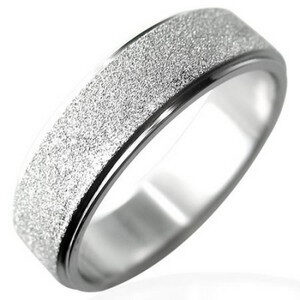
2. Sandblasting (Shot Blasting)
The process: the sheet is bombarded with abrasive media under pressure until the surface becomes a uniform, fine-grained matte. The texture hides everything: fingerprints, water spots, handling marks.
Where it belongs: large panels and anything touched often — door interiors, back panels, hardware. It is the most forgiving finish on this list, which makes it the sensible default for surfaces that get cleaned by staff rather than admired by guests.
Where it fails: it slightly reduces the steel’s smoothness, so in genuinely corrosive environments (coastal salt air) a matte profile holds contaminants a polished surface would shed. It also cannot be repaired locally: a deep gouge in a sandblasted panel shows as a shiny line, and re-blasting means re-doing the whole panel.

3. Chemical Treatment (Acid Etch)
The process: the surface is patterned chemically — masked and etched with acid formulations — producing matte-and-gloss contrasts, patterns, or textures that mechanical finishing cannot repeat exactly.
Where it belongs: feature panels and signage surfaces where a pattern is wanted; it is a design finish, not a working finish.
Where it fails: consistency and depth. The effect depends on etch time and masking quality, so panels in the same batch vary more than mechanically finished ones; and the etched texture can trap grime in its pattern, which matters in a cellar where dust settles on horizontal features. Cleanability should be part of the decision, not an afterthought.

4. Mirror Finish
The process: progressive mechanical polishing through successively finer abrasives to a reflective surface. On stainless, mirror grades are specified by their own standards, and the good ones are genuinely optical.
Where it belongs: ceilings and accent panels in show cellars, where reflection doubles the visual volume of the room and the lighting design. A mirror ceiling above a glass-front display is a classic for a reason.
Where it fails: everywhere a hand goes. Every fingerprint shows; every installation scratch is permanent; and on a horizontal surface, dust becomes visible the day after cleaning. Mirror is a finish you accept a maintenance contract for. Never specify it for door handles, rack edges, or anything within reach.

5. Surface Coloring on Pipe
The process: color on tube and pipe sections — the rails, frames, and posts that make up racking — is applied by electrochemical or chemical coloring, or by PVD on tube, depending on the color and the batch size.
Where it belongs: the visible skeleton of a metal cellar. Coloring the pipe rather than sheet is often the economical way to get color, because the pipe surface area is smaller and the batches are run per-diameter.
Where it fails: matching. Colored pipe and colored sheet from different processes rarely match perfectly in the same light — a champagne-gold PVD sheet next to an electro-colored tube reads as two different golds. If a project mixes both, the color standard should be agreed on physical samples before production, not on screen renders.
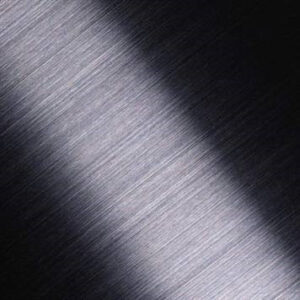
6. Hairline Brushing
The process: the workhorse. The sheet is ground with progressively finer belts to a continuous linear grain, usually specified with the grain running a stated direction.
Where it belongs: nearly everything. Hairline is forgiving of fingerprints, tolerates cleaning, matches across batches reliably, and costs the least of the finished options. Ninety percent of the stainless in a typical wine cellar — rack rails, frames, cabinet bodies — is hairline for exactly these reasons.
Where it fails: direction. Grain running one way looks different when panels are rotated, and on-site fabricators sometimes rotate panels to save material — the resulting patchwork is the most common cosmetic complaint in brushed installs. State the grain direction on the drawing.

7. Spray Coating
The process: liquid or powder coating applied over the steel — the only finish on this list that sits on top of the metal rather than modifying it.
Where it belongs: custom colors outside the metallic palette — deep matte black, architectural whites, RAL-matched colors to match joinery. Powder coating in particular gives a thick, chip-resistant layer and an enormous color range.
Where it fails: adhesion is everything. Coating over properly pre-treated steel holds for years; coating over poorly prepared steel chips at edges within a season. And because the coating covers the steel’s own corrosion resistance, a chip that exposes the substrate matters more than a chip on painted mild steel would. On rack edges and door returns — the places things get knocked — inspect the coating quality before accepting the delivery.
The Fingerprint Test, Run on Site
One practical way to choose between finishes without a sample library: run the finger test on every surface you are considering, in the lighting of the room it will live in. Press a fingertip firmly for three seconds and step back a meter. Hairline and sandblasted surfaces will show almost nothing; a mirror will show the print for a week; a PVD gold will show a soft sheen that wipes with a cloth; a poor spray coat may show a ring that never wipes out. Do it at the height the surface will actually be viewed from — a finish judged from fifty centimeters is a different finish at two meters.
Then do the cloth test on the sample with the cleaner you actually own, because cleaning chemistry is where finishes quietly die: some etched and coated surfaces lose their effect under solvents that hairline shrugs off. The two tests together, run on real samples under real light, sort finishes faster than any catalog — and they are the same tests we run on production panels at SS Wine Cellar before a finish is approved for a build.
How to Combine Them Without Regret
Most real cellars use two or three finishes, and the combinations that work share a logic: durable where hands go, expressive where eyes go. Hairline or sandblasted on everything touched; PVD or mirror only on the frame lines and ceilings that carry the design; spray coating when an architectural color must be matched exactly. The failures come from inverting that rule — expressive finishes on working surfaces — or from mixing color processes without physical samples.
The finishes above are the ones we run and inspect daily on built-to-order wine storage; the rooms across our metal cellar builds show most of them in situ, and the maintenance notes in our care guides cover how each one ages.
The one-line version, for quoting purposes: hairline for the ninety percent you use, PVD or mirror for the ten percent you look at — and never the reverse.
Editor’s note: this article was drafted with AI assistance and reviewed by our production and export team before publishing.

2 Responses
Itís nearly impossible to find well-informed people for this topic, but you seem like you know what youíre talking about! Thanks
Thanks. We will post more useful information for you in the following days.